
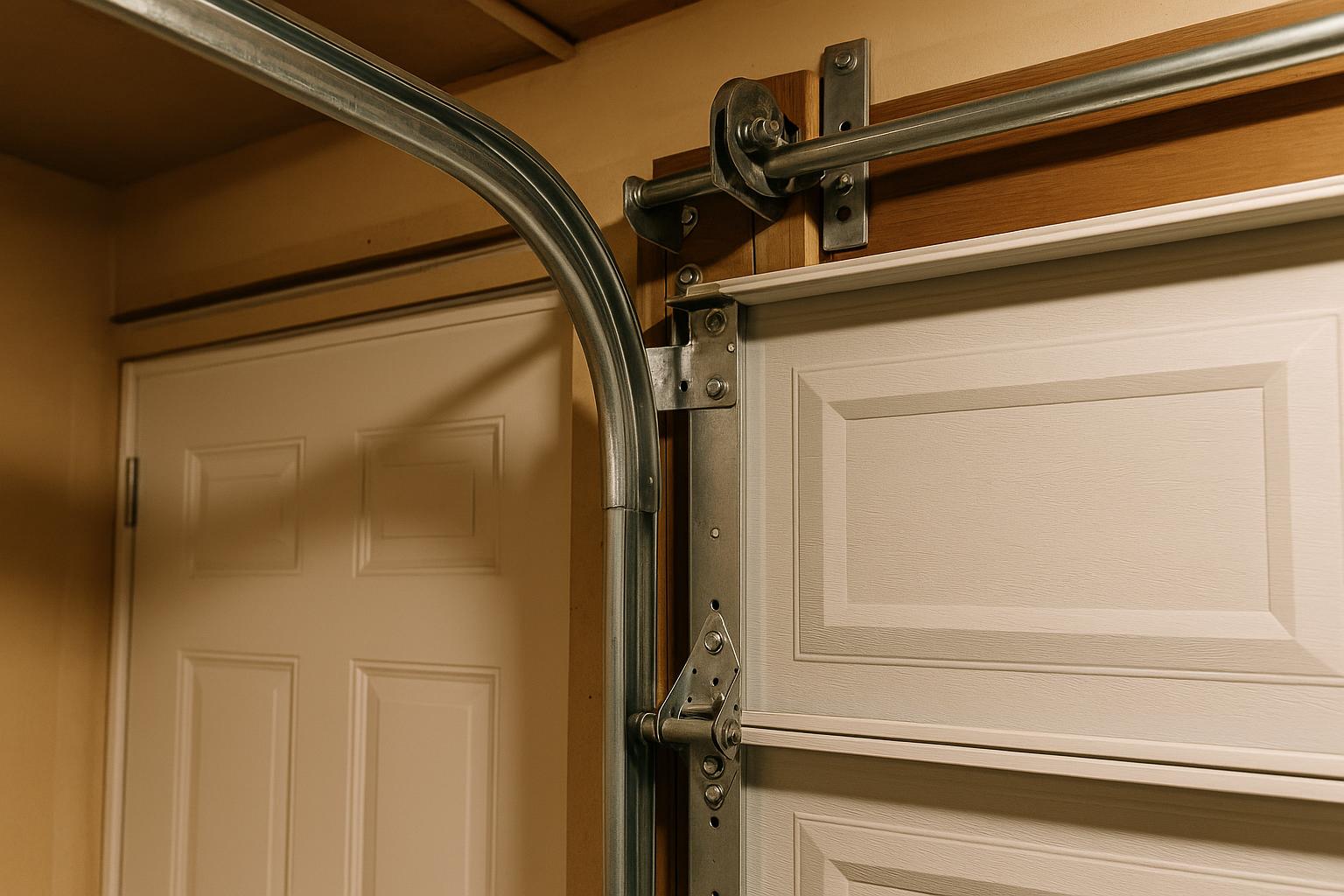
Your Garage Door Shouldn't Sound Like That
You press the button on your garage door opener and instead of a smooth, quiet operation, you're greeted with grinding, squealing, popping, or rattling. If your garage door has started making unusual noises, you're not alone — it's one of the most common complaints we hear from homeowners in Fairborn and the surrounding area.
The good news is that most garage door noises point to identifiable, fixable problems. The bad news is that ignoring them usually makes things worse — and more expensive. In this guide, we'll walk you through the most common garage door sounds, what causes them, and what you should do about each one.
Squealing or Screeching Sounds
A high-pitched squeal or screech when your garage door moves is one of the most unsettling noises you can hear. It typically means metal is grinding against metal without proper lubrication.
Common Causes
- Dry rollers: The rollers that guide your garage door along the tracks need regular lubrication. When they dry out, they produce a harsh squealing sound as the door moves up and down.
- Worn-out nylon rollers: Even nylon rollers, which are quieter than steel, can wear down over time and begin to squeak or bind in the track.
- Lack of hinge lubrication: The hinges connecting your garage door panels pivot every time the door opens or closes. Without lubrication, they'll protest loudly.
What to Do
Apply a garage door-specific lubricant (not WD-40, which is a solvent, not a lubricant) to the rollers, hinges, and springs. If the noise persists after lubrication, the rollers may need to be replaced entirely. This is a quick fix that most Fairborn homeowners can have handled in a single service call.
Grinding or Scraping Noises
A grinding or scraping sound usually indicates a more serious mechanical issue than simple dryness. This noise often means something is physically rubbing or catching where it shouldn't be.
Common Causes
- Misaligned tracks: If the vertical or horizontal tracks have shifted even slightly, the door panels or rollers can scrape against the track edges as the door moves.
- Bent tracks: A track that's been dented or bent — sometimes from bumping it with a car or heavy object — can cause the rollers to grind as they pass the damaged section.
- Worn gear in the opener: Many chain-drive and belt-drive garage door openers use a nylon gear inside the motor unit. Over time, this gear wears down and produces a grinding noise, especially when the door is in motion.
What to Do
Track alignment and opener gear issues should be handled by a professional. Attempting to bend tracks back into place without the right tools can make the problem worse and create a safety hazard. If you're hearing grinding sounds, it's best to have someone inspect the system before the door gets stuck or falls off the track.
Rattling and Vibrating
A rattling garage door can be annoying, especially if your garage is attached to your home and the vibration travels through the walls. Fortunately, the cause is usually straightforward.
Common Causes
- Loose hardware: The nuts, bolts, and screws that hold your garage door system together can loosen over hundreds of open-and-close cycles. Loose brackets, track fasteners, or opener mounting hardware will rattle with each use.
- Loose chain on the opener: If you have a chain-drive garage door opener, the chain can develop slack over time, causing it to slap or rattle during operation.
- Unsecured opener: If the garage door opener unit itself isn't firmly mounted to the ceiling, it can vibrate and amplify noise throughout the garage.
What to Do
Start by tightening all visible nuts and bolts on the tracks, hinges, and brackets. Check the chain tension on your opener if applicable — your owner's manual should specify the correct amount of sag. If the opener unit is vibrating, consider having anti-vibration pads installed between the motor and the ceiling mount. Many homeowners in Beavercreek and Huber Heights have solved persistent rattling with this simple upgrade.
Popping or Snapping Sounds
A loud pop or snap is harder to ignore — and for good reason. These sounds can indicate a component under high tension is shifting or failing.
Common Causes
- Torsion spring issues: The torsion springs above your garage door are under extreme tension. As they age or develop weak spots, they may pop or snap as they unwind and rewind during door operation. A full spring break produces a sound like a gunshot.
- Panels shifting: Warped or damaged panels can pop as they flex under the tension of the door's movement.
- Cable slipping: The lift cables that connect the springs to the bottom of the door can slip off the drum, producing a sudden snapping sound.
What to Do
If you hear a loud snap and your garage door suddenly won't open or feels extremely heavy, a spring has likely broken. Do not attempt to open or repair the door yourself. Torsion springs are under enough tension to cause serious injury. Call a professional immediately. This is one of the most common emergency calls we handle for homeowners across Fairborn, Xenia, and Riverside.
Banging When the Door Opens or Closes
A banging or slamming noise at the top or bottom of the door's travel usually points to a problem with the door's balance or the opener's limit settings.
Common Causes
- Incorrect limit settings: Your garage door opener has settings that tell it where the door should stop when fully open and fully closed. If these are set incorrectly, the opener may drive the door too far, causing it to slam into the floor or the stop bracket at the top.
- Broken or weak springs: If the springs aren't providing enough counterbalance, the door can drop faster than it should during closing, producing a bang when it hits the ground.
- Worn or missing stop bumpers: The rubber bumpers at the top of the track that cushion the door when it reaches the fully open position can wear out or fall off, causing a hard metal-on-metal impact.
What to Do
Adjusting the opener's limit settings is usually described in the owner's manual, but if you're unsure, a technician can dial it in quickly. If the door feels heavy or drops fast, that's a spring balance issue that requires professional attention.
When to Call a Professional
Some garage door noises can be resolved with a can of lubricant and a socket wrench. Others signal problems that are dangerous to tackle on your own. Here's a simple rule of thumb:
- DIY-friendly: Lubricating rollers, hinges, and springs. Tightening loose bolts and brackets.
- Call a pro: Anything involving springs, cables, track realignment, or opener motor repair.
At Fairborn Garage Door Solutions, we help homeowners throughout Fairborn, Enon, and the surrounding communities diagnose and fix noisy garage doors every week. Whether it's a minor lubrication issue or a spring that's about to fail, we'll identify the problem and fix it right the first time.
Don't Wait Until the Noise Becomes a Breakdown
Strange noises are your garage door's way of asking for help. Addressing them early almost always costs less than waiting for a full failure. If your garage door has started making sounds that weren't there before, give us a call or schedule a service appointment. We'll get your door running quietly and safely again.