
The Moment You Notice Something's Off
You're mid-set on the leg press, or sanding a cabinet door, and you feel it: a thin line of cold air sliding under the garage door and across the floor. Or maybe it's August and there's a film of condensation beading up on the inside panel, dripping onto the rubber mats you just laid down. One of you says the door's fine, it's always been like that. The other says it needs to be fixed now that the space actually matters. You're both a little right.
Why the Door Didn't Get the Memo
A standard garage door is built to do one job: open and close so a car can get in and out. It's not built to hold a comfortable, stable temperature, block humidity, or stay airtight. When a garage turns into a gym, home office, or workshop, the expectations for that room change overnight — but the hardware doesn't change unless you make it.
That mismatch is the root of almost every argument about the door once a garage gets repurposed. The door isn't broken. It's just being asked to do a job it was never designed for.
What Actually Changes Once You Start Using the Space
- Temperature swings get noticed. Nobody cared about a 20-degree drop in an empty garage. In a gym or workshop where you're standing still for an hour, that same swing is uncomfortable, and in a Fairborn winter with single-digit mornings, it's a lot more than uncomfortable.
- Humidity becomes a real problem. Ohio summers are humid, and a converted space with less airflow than an open garage will trap moisture. That shows up as condensation on the door panels, rust starting at the bottom corners, or a musty smell in a finished workshop.
- The bottom seal starts to matter a lot more. In an unused garage, a worn weatherstrip was background noise. In a gym, it's the reason cold air pools around your feet. In winter, it's also the entry point for melting snow and road salt that get kicked up when the door opens, which accelerates rust on the bottom panel and track.
- Equipment vibration can loosen hardware. Heavy workshop tools, weight racks being set down, or a squat rack banging the floor can gradually loosen hinges, track bolts, and even the opener's mounting bracket over time, especially on an older door.
- Usage patterns change. A converted space often means the door gets opened and closed less often, sometimes for weeks at a time if you're using a side door instead. Rollers and hinges that don't move regularly dry out and start sticking or squealing when you finally do run the door.
The Insulation Argument
This is usually where the real disagreement lives. One spouse wants to add rigid foam insulation panels to the existing door as a cheap fix. The other wants to replace the whole door with a properly insulated one. Both can work, but they come with different trade-offs.
Add-on insulation kits
These are inexpensive and help with temperature and some noise dampening, but they add weight to a door that was balanced for its original, lighter weight. A door that opens and closes smoothly before insulation can suddenly feel heavy, strain the opener motor, or throw the springs out of balance. If you go this route, the springs need to be checked and likely re-tensioned to match the new weight. Skipping that step is how you end up with a door that slams down faster than it should, or an opener that burns out early.
Replacing with a factory-insulated door
Costs more upfront, generally in the low-to-mid thousands depending on size and style as a rough national range, but the door, springs, and hardware are matched to the actual weight from day one. For a space you're using daily — a real home gym or a workshop where you're in and out constantly — this is usually the better long-term answer, especially given how much temperature swings in this region between January and July.
The Practical Middle Ground
If a full replacement isn't happening this year, there's a short list that solves most of the daily annoyance without a big investment:
- Replace worn bottom weatherstripping and check the side seals — this alone stops most of the draft complaints.
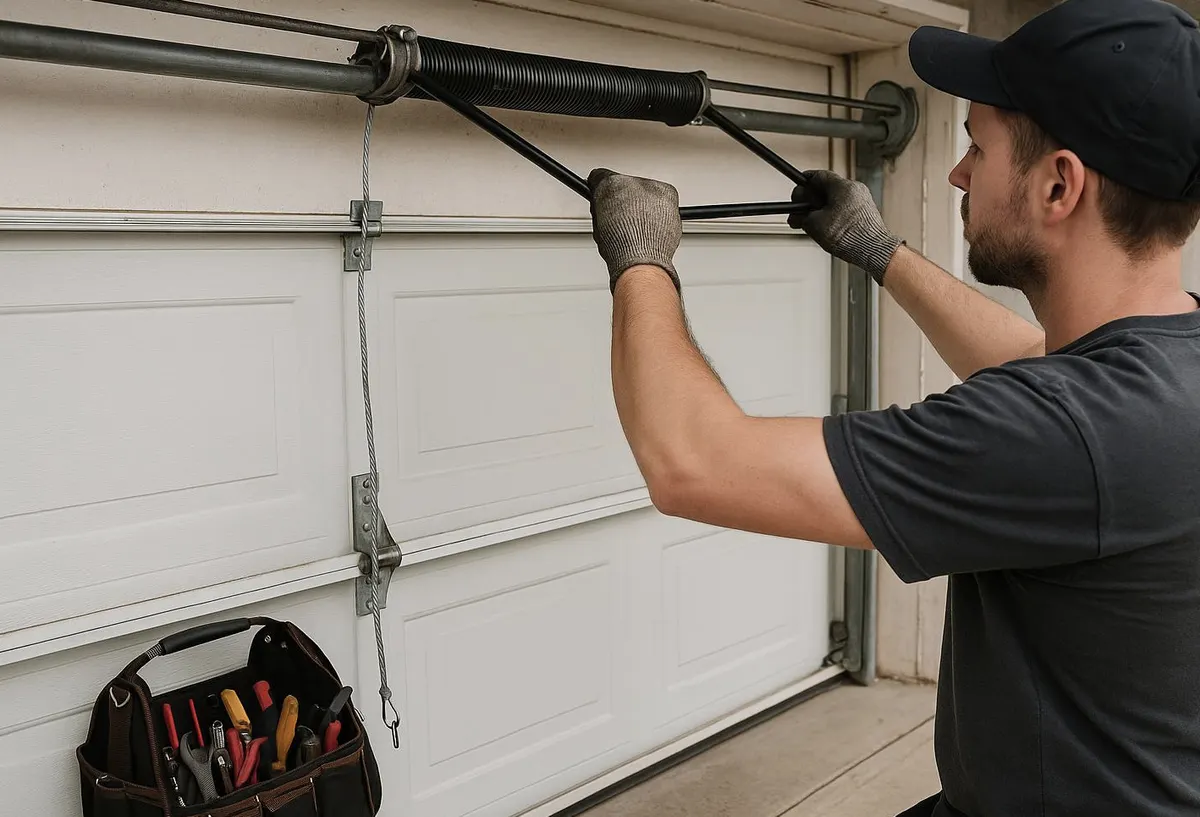
- Have the door's balance and spring tension checked if you've added any insulation, shelving, or storage weight to the door itself.
- Keep hinges, rollers, and the opener chain or belt lubricated, especially if the door is being used less often than before.
- Address rust at the bottom corners before winter, since salt and slush sitting against bare metal will spread quickly over a season.
When to Call Fairborn Garage Door Solutions
If you're arguing over whether the door needs attention or a full rethink, that's exactly the kind of thing worth getting a second opinion on before spending money in the wrong direction. Fairborn Garage Door Solutions can check whether your current door and springs are actually rated for the weight you've added, handle a proper Garage Door Installation if an insulated replacement makes more sense for how you're using the space, or take care of Spring Replacement if the balance is off from added insulation or storage. We also handle routine Garage Door Maintenance to catch seal wear and hardware issues before they turn into bigger repairs.
If your converted garage, gym, or workshop isn't holding up the way it should, call Fairborn Garage Door Solutions and we'll come take a look — serving Fairborn, Beavercreek, Xenia, Enon, Huber Heights, Riverside, Yellow Springs, and Centerville, OH.