
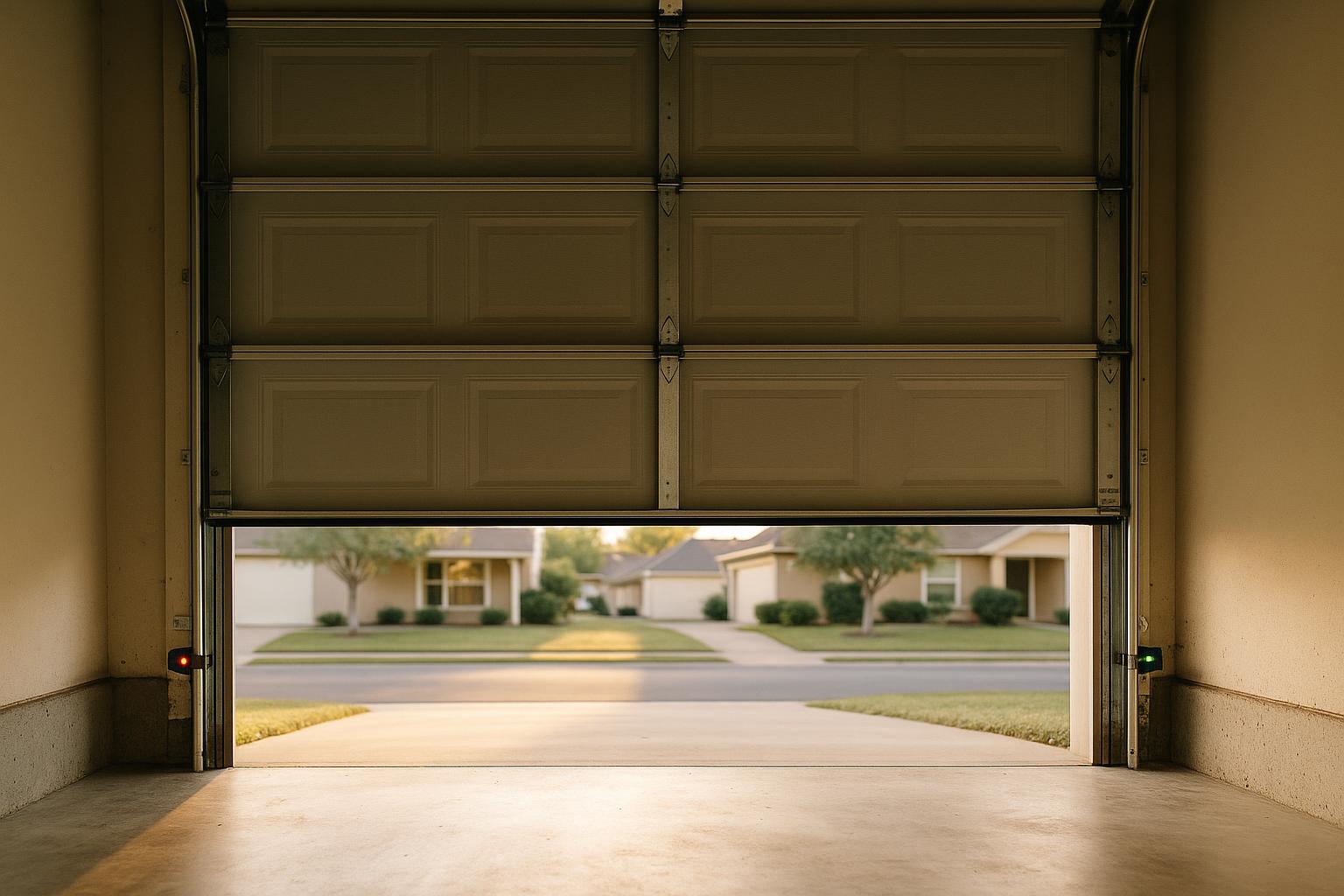
That Frustrating Moment When Your Garage Door Won't Stay Closed
You press the button on your remote, watch the garage door start its descent, and then — just before it reaches the floor — it stops and reverses right back up. You try again. Same thing. Maybe you try holding the wall button down, and it finally closes, but the moment you let go, up it goes again.
This is one of the most common garage door complaints we hear from homeowners in Fairborn, and it's more than just an annoyance. A garage door that won't close properly leaves your home vulnerable to weather, pests, and security risks. The good news is that in most cases, the cause is straightforward and fixable.
Let's walk through the most likely reasons your garage door reverses before hitting the floor and what you can do about each one.
1. Misaligned Safety Sensors
This is the number one cause of a garage door that reverses before closing completely. Every garage door opener manufactured after 1993 is required to have photo-eye safety sensors mounted near the bottom of the door tracks, about six inches off the ground. These sensors send an invisible beam across the opening. If anything breaks that beam — a bike, a trash can, a child, or even a cobweb — the door is designed to reverse immediately.
Over time, these sensors can get bumped out of alignment. It happens easily, especially in busy garages. When the sensors can't "see" each other, the opener interprets it as an obstruction and reverses the door.
What to check:
- Look at the LED lights on both sensors. Typically, one should glow steady green and the other steady amber. If either light is blinking, the sensors are misaligned or obstructed.
- Clean the sensor lenses with a soft cloth. Dust, dirt, and spider webs are surprisingly common culprits here in Ohio, especially during spring and fall.
- Gently adjust the sensor brackets until both lights glow steady. Make sure they're pointing directly at each other.
If you've tried all of this and the lights still blink, the sensor wiring may be damaged or the sensors themselves may need replacement.
2. Incorrect Close-Limit Settings
Your garage door opener has internal settings called travel limits that tell the motor exactly how far the door should travel when opening and closing. If the close-limit setting is off — even slightly — the opener may think the door has hit an obstruction when it's actually just reaching the floor.
When the opener senses unexpected resistance at the bottom of travel, it activates the auto-reverse safety feature. The door goes back up as a precaution.
What to check:
- Consult your opener's manual for instructions on adjusting the down-limit or close-limit. Most openers have small adjustment screws or a digital menu for this.
- Make small adjustments — usually a quarter turn at a time — and test the door after each change.
- If you're not comfortable making these adjustments, this is a quick fix for a professional technician.
3. Worn or Damaged Rollers and Tracks
Garage door rollers guide the door panels along the vertical and curved sections of the track. When rollers wear out, crack, or become clogged with debris, they create friction and resistance. The opener may interpret this added resistance as an obstruction and reverse the door.
Similarly, bent or misaligned tracks can cause the door to bind at certain points during its travel. This is especially common in older homes throughout the Fairborn area where garage doors have been operating for decades without track maintenance.
What to check:
- Visually inspect the rollers for cracks, chips, or flat spots. Nylon rollers tend to wear more quietly but still degrade over time.
- Look along the tracks for dents, bends, or gaps where the track has pulled away from the wall.
- Listen for grinding, scraping, or popping sounds when the door moves — these are signs of roller or track problems.
4. Broken or Weakened Springs
Your garage door springs do the heavy lifting — literally. They counterbalance the weight of the door so the opener motor doesn't have to work as hard. When a spring weakens or partially breaks, the door becomes significantly heavier for the opener to manage.
A door that suddenly feels heavier can trigger the opener's force sensitivity, causing it to reverse. You might also notice the door closing unevenly, sagging on one side, or the opener motor straining more than usual.
Important safety note: Garage door springs are under extreme tension and can cause serious injury if handled improperly. Spring inspection and replacement should always be performed by a trained technician. This is not a DIY repair.
5. Problems with the Opener's Force Settings
In addition to travel limits, garage door openers have force settings that control how much pushing or pulling power the motor applies. If the downward force setting is too low, the opener may not have enough power to push the door all the way to the floor, especially if there's even minor resistance from weather seals, slight track friction, or temperature changes.
During Fairborn's cold winter months, lubricant on the springs and tracks can thicken, creating more resistance than usual. This seasonal change alone can cause a door that worked fine in September to start reversing in January.
What to check:
- Refer to your opener manual for force adjustment instructions.
- Increase the down-force setting in small increments and test after each adjustment.
- Be careful not to set the force too high — the auto-reverse feature exists to protect people and property, and you don't want to override that safety margin.
6. Damaged Weather Seal Along the Bottom
The rubber weather seal along the bottom edge of your garage door creates a tight seal against the floor to keep out rain, snow, wind, and pests. Over time, this seal can warp, swell, or become stiff, especially after exposure to Ohio's temperature swings. A deformed seal can catch on the concrete floor and create enough resistance to trigger the auto-reverse.
Inspect the bottom seal for cracks, tears, or sections that have become rigid. Replacing a worn weather seal is inexpensive and can solve the reversing problem while also improving your garage's energy efficiency.
When to Call a Professional
Some of these issues — cleaning sensors, checking for obvious obstructions, or replacing a weather seal — are reasonable for a handy homeowner to tackle. But if you've gone through the basics and your door still won't close properly, it's time to call in a professional.
Issues involving springs, track realignment, opener motor problems, or wiring require specialized tools and experience. Attempting these repairs without proper training can result in injury or further damage to your garage door system.
At Fairborn Garage Door Solutions, we diagnose reversing problems quickly because we've seen them hundreds of times. We serve homeowners throughout Fairborn, Beavercreek, Xenia, Enon, Huber Heights, and Riverside, and we carry the parts needed to handle most repairs in a single visit.
Don't Ignore a Reversing Garage Door
A garage door that won't close isn't just inconvenient — it's a security risk and an energy drain. Whether the cause is a dusty sensor or a failing spring, the problem won't fix itself. Most reversing issues are affordable to repair when caught early, but ignoring them can lead to more expensive damage to the opener or door panels over time.
If your garage door keeps reversing and you can't pinpoint the cause, give us a call. We'll get it diagnosed, explain your options clearly, and get your door closing the way it should — every single time.